Elmont, NY
Roofing in Elmont
Same crew, same written scope. This page covers what is specific to Elmont rather than repeating the service pages.
ElmontSoutheast Queens
Same crew, same written scope. This page covers what is specific to Elmont rather than repeating the service pages.
A Cape Cod puts its eaves low and its dormer cheeks into the roof plane, so the flashing runs are long and close to the gutter line. Ranches spread a large roof area over a single story, which makes ponding and poor falls easier to miss.
Elmont sits across the Nassau County line, east of Cambria Heights.
Tracing the entry point rather than patching the stain.
Tear-off, deck inspection, and a system specified for the pitch.
Low-slope work on rear extensions, porches and dormers.
Step and counter-flashing rebuilt into the mortar course.
Documented assessment after a nor'easter or a tropical remnant.
New York City requires a DCWP Home Improvement Contractor license for residential roofing. Ask for the number and check it on the DCWP register before work starts.
A like-for-like re-roof on a one- or two-family house generally does not need a DOB permit. Changing the structure, the pitch or the decking layout generally does.
Above a low threshold the work must be under a written contract setting out scope, price and payment schedule. That is the law, not a courtesy.
A New York contractor with employees must carry workers' comp, and on a roof it matters. Ask for the certificate rather than a verbal assurance.
7,667 housing units, 67.4% of them detached single-family, in Tudor, Colonial and Cape Cod styles.
Detached Colonials, Tudors and Capes alongside brick two-family houses, on lots with driveways and porches.
Dutch Colonial and Tudor houses, many still well kept.
Three- to five-bedroom homes with an unusually high share of row and attached houses -- higher than almost any neighborhood in the country.
A mix of detached and attached single-family homes and townhouses.
Predominantly low-rise residential, like the rest of Community Board 13.
One- and two-family houses on their own lots, in every style the period produced.
Active leaks are treated as same-day where daylight and weather allow. Everything else is normally within the week.
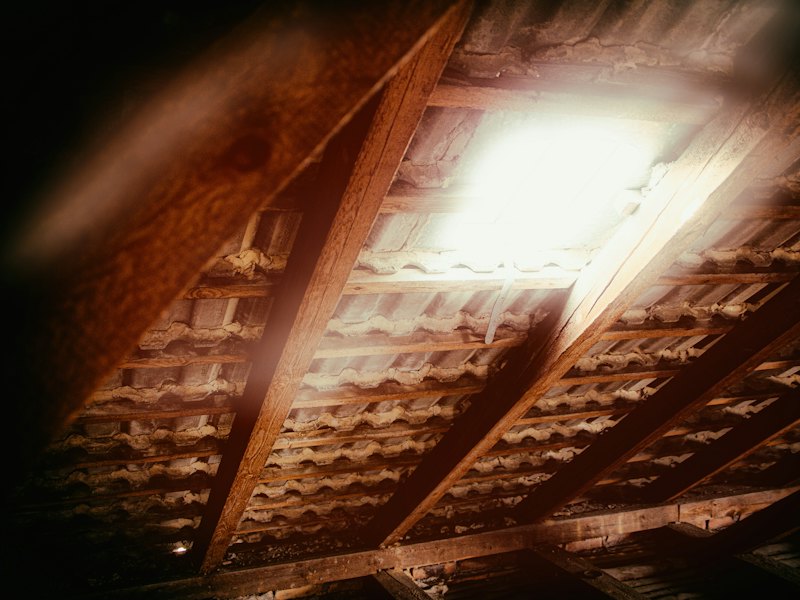
Water runs along battens and rafters before it shows. The entry point is usually uphill of the stain and often several feet away, which is why a survey covers the attic as well as the roof.
Diagnosis yes, most permanent repairs no. A temporary cover goes on first and the permanent fix follows.
Yes, and it is written down. Nothing is charged before the scope is agreed.
We are usually on site the same day.